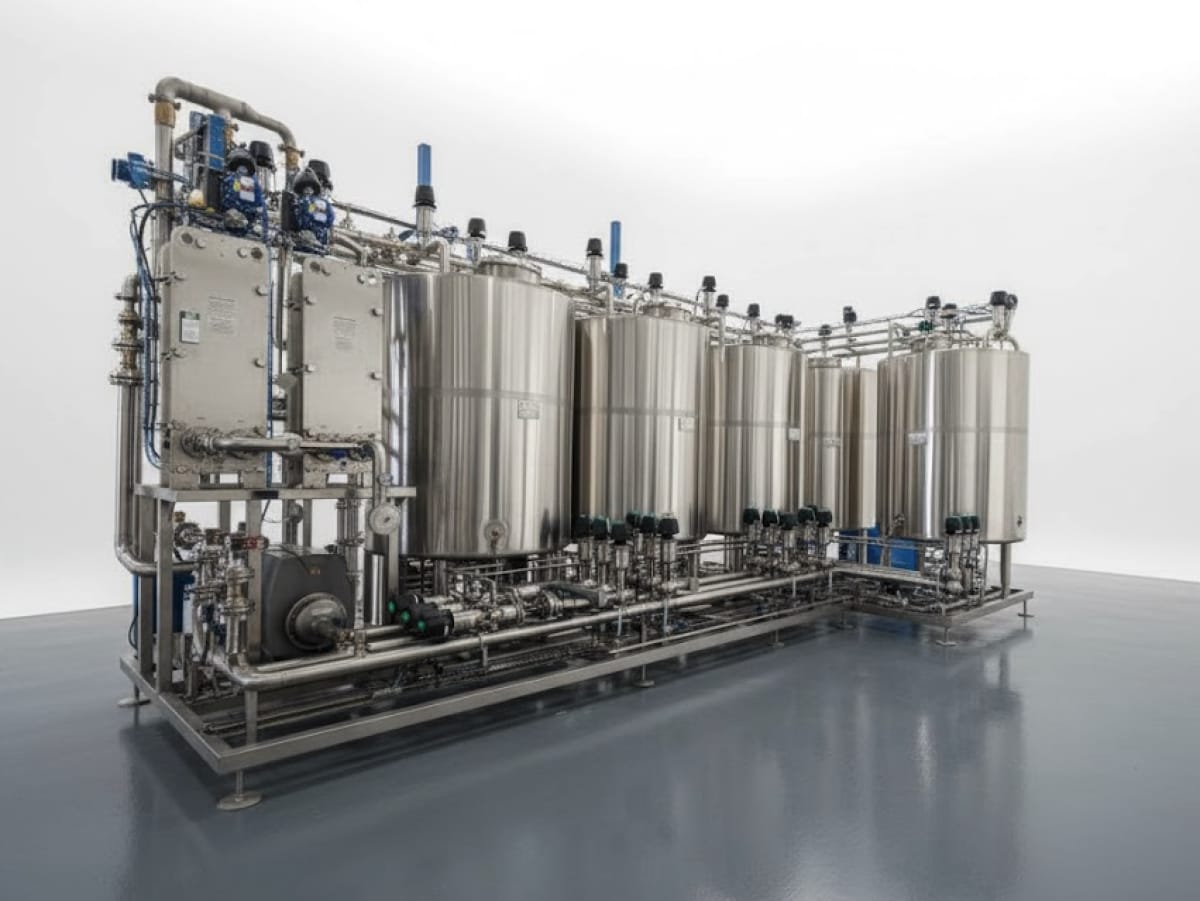
CIP is a process system, not simply a tank with a pump. DPS coordinates circuit design, chemical and water demand, flow velocity, temperature, return monitoring, recipe control, drainage, and verification with the equipment and production schedule it must serve.
The process engineering guide establishes product and sanitary requirements. The automation and controls guide connects recipes, permissives, alarms, and records to the cleaning sequence.
Map Circuits And Cleaning Risk
List product-contact equipment, piping, valves, dead legs, spray devices, return paths, and manual-clean areas. Define soils, allergens, temperature limits, chemical compatibility, flow targets, and the sequence needed between products. Confirm which circuits may run in parallel and where cross-connection must be prevented.
Size Utilities And Recovery
Calculate water, chemical, steam, power, compressed air, drain, and effluent requirements for the actual production schedule. Include tank recovery, heat-up time, rinse demand, discharge limits, and the effect of overlapping cleaning cycles on plant utilities.
Automate And Verify
Build recipes around documented steps, permissives, interlocks, conductivity, temperature, flow, time, and return conditions. Define alarm response and operator approval for deviations. Validate the installed circuit with inspection, instrument calibration, water or chemical trials, and site-specific quality procedures.
Planning Checklist
- Equipment and circuit list with soils, allergens, materials, and cleanability risks.
- Cleaning chemistry, flow, temperature, time, and verification requirements.
- Utility loads, tank sizing, recovery, drainage, and effluent constraints.
- P&IDs, valve matrix, recipes, alarms, and access requirements.
- FAT/SAT, calibration, training, records, and release criteria.
A CIP system is ready when the site can repeatedly achieve its defined cleaning result and prove it with agreed records.