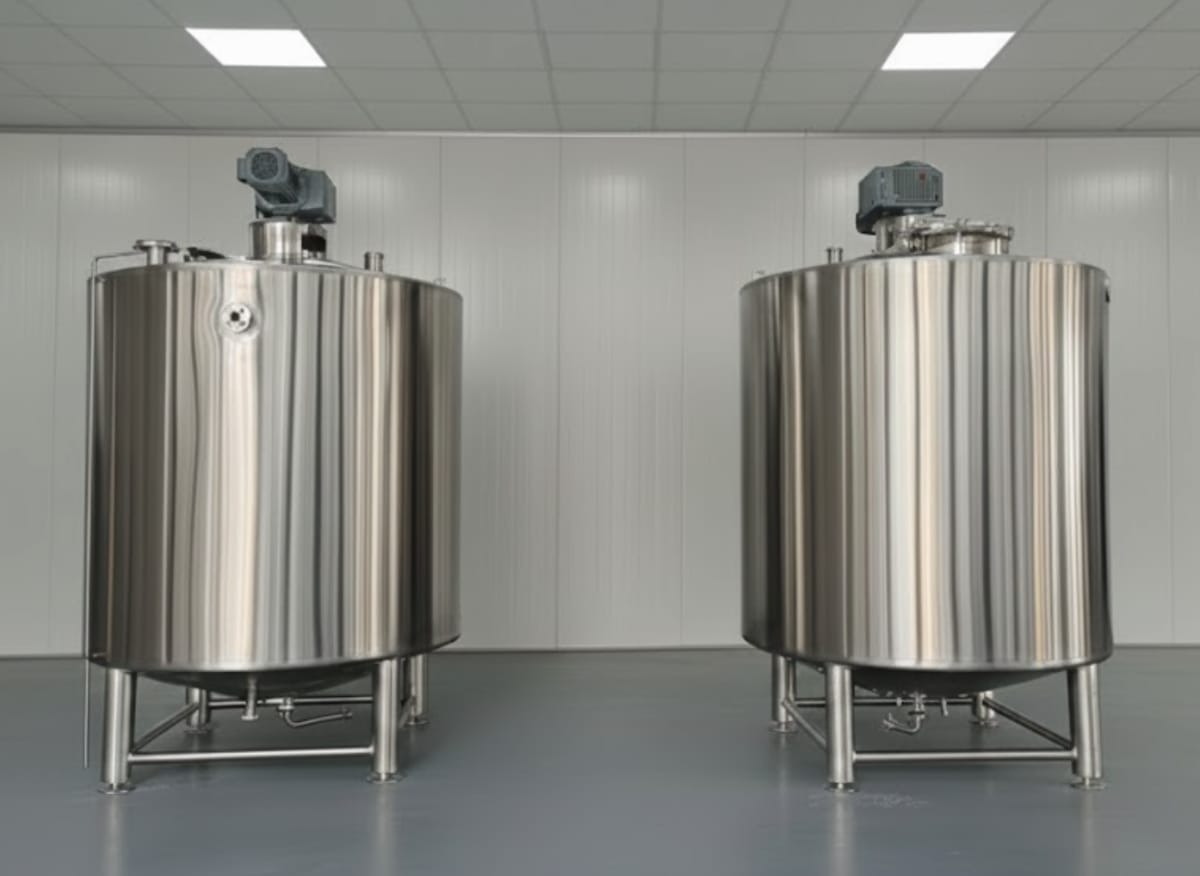
Sanitary tanks and vessels must work across production, cleaning, maintenance, and future change. DPS connects vessel sizing and fabrication to product behavior, residence time, agitation, heating or cooling, access, drainage, instrumentation, and the surrounding process system.
Establish Working Volume And Duty
Separate gross, working, minimum, and usable volume. Account for surge, foam, headspace, hold time, batching tolerances, transfer losses, and the production schedule. Confirm whether the vessel stores, blends, heats, cools, ferments, or feeds another operation.
Define Sanitary And Mechanical Requirements
Specify product-contact materials, surface finish, weld quality, insulation, jacket duty, manways, spray devices, bottom outlets, supports, platforms, and maintenance access. Confirm drainage and inspection requirements before the tank is detailed.
Coordinate Connections And Controls
Map process, utility, CIP, instrumentation, and electrical connections against the layout and installation sequence. The equipment manufacturing and supply guide helps establish vendor drawing reviews and inspection gates; installation and integration covers readiness and commissioning.
Planning Checklist
- Product, volume, residence time, temperature, and agitation basis.
- Materials, finish, sanitary, access, drainage, and structural requirements.
- Process, utility, CIP, instrument, electrical, and control interfaces.
- Fabrication drawings, inspections, tests, and documentation.
- Installation, commissioning, training, spares, and acceptance criteria.
A vessel is only useful when its working volume and interfaces match the process it must support.